
The NHS isn't ready for a hotter Britain
Heatwaves are the new normal. The NHS was built for yesterday's climate and last week's red heat warning was a sign that we need to build an NHS that can withstand climate change


As temperatures soared above 35°C across the United Kingdom last week and the Met Office issued it’s highest level red heat warning, the public was urged to stay indoors, stay hydrated, cool and avoid unnecessary travel. Yet for thousands of NHS staff, there was no escape and they continued to work as normal in sweltering clinical environments with few opportunities to escape the heat.
Extreme heat is no longer an occasional inconvenience, it is one of the clearest ways climate change is already impacting healthcare. On 24 June 2026, the London Ambulance Service received almost 7900 emergency calls and responded to a record 642 category 1 (life-threatening) emergencies, the highest number in its history, all driven by the extreme heat across London. Heatwaves increase admissions for dehydration, heatstroke and exacerbations of cardiorespiratory disease, placing additional pressure on already overstretched services.
Outdated NHS buildings
As demand soars, NHS staff are expected to handle the heat, working in buildings that often struggle to cope with rising temperatures. The UK Health Alliance on Climate change estimates that almost 90% of England’s hospital estates are susceptible to overheating. Poor ventilation, glazing and heat generated by clinical activity mean indoor temperatures sometimes exceed those outdoors. These conditions are more than just uncomfortable - heat exposure impairs concentration and performance and in healthcare settings this has obvious patient safety implications.
DAUK Survey
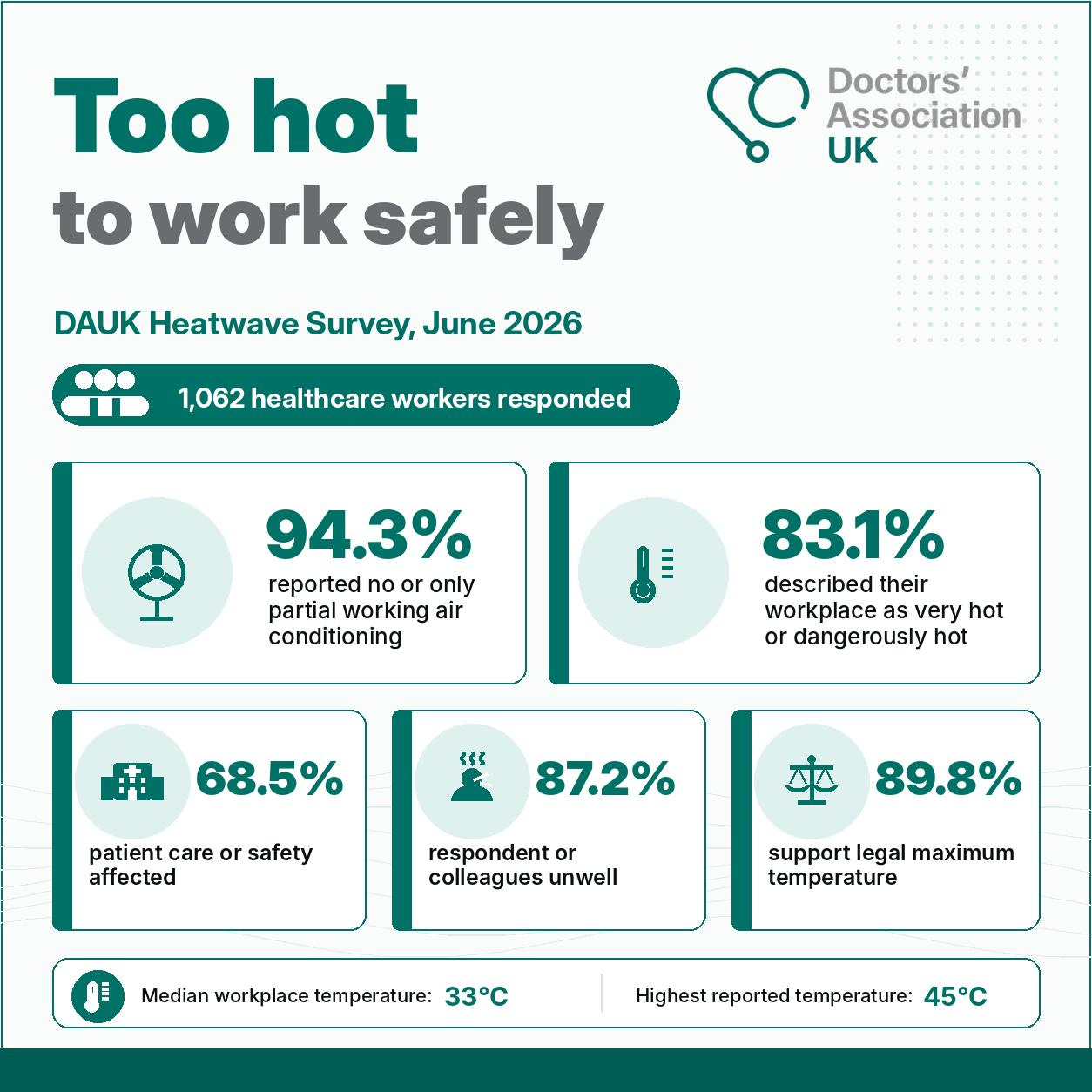
Recognising these concerns, The Doctors’ Association UK (DAUK) launched a rapid survey during the recent heatwave to document working conditions experienced by frontline staff. It’s clear that the heat is disrupting clinical care and staff well-being.
Among 1000 respondents, 94.3% reported no or partial air-conditioning in their NHS workplace. 87.2% reported that either themselves or colleagues felt unwell due to this, with 68.5% saying the heat had impacted patient care. The findings can be seen in full here, and will be shared with the Department of Health and Social Care to support calls for a nationally recognised maximum safe working temperature in NHS clinical environments.
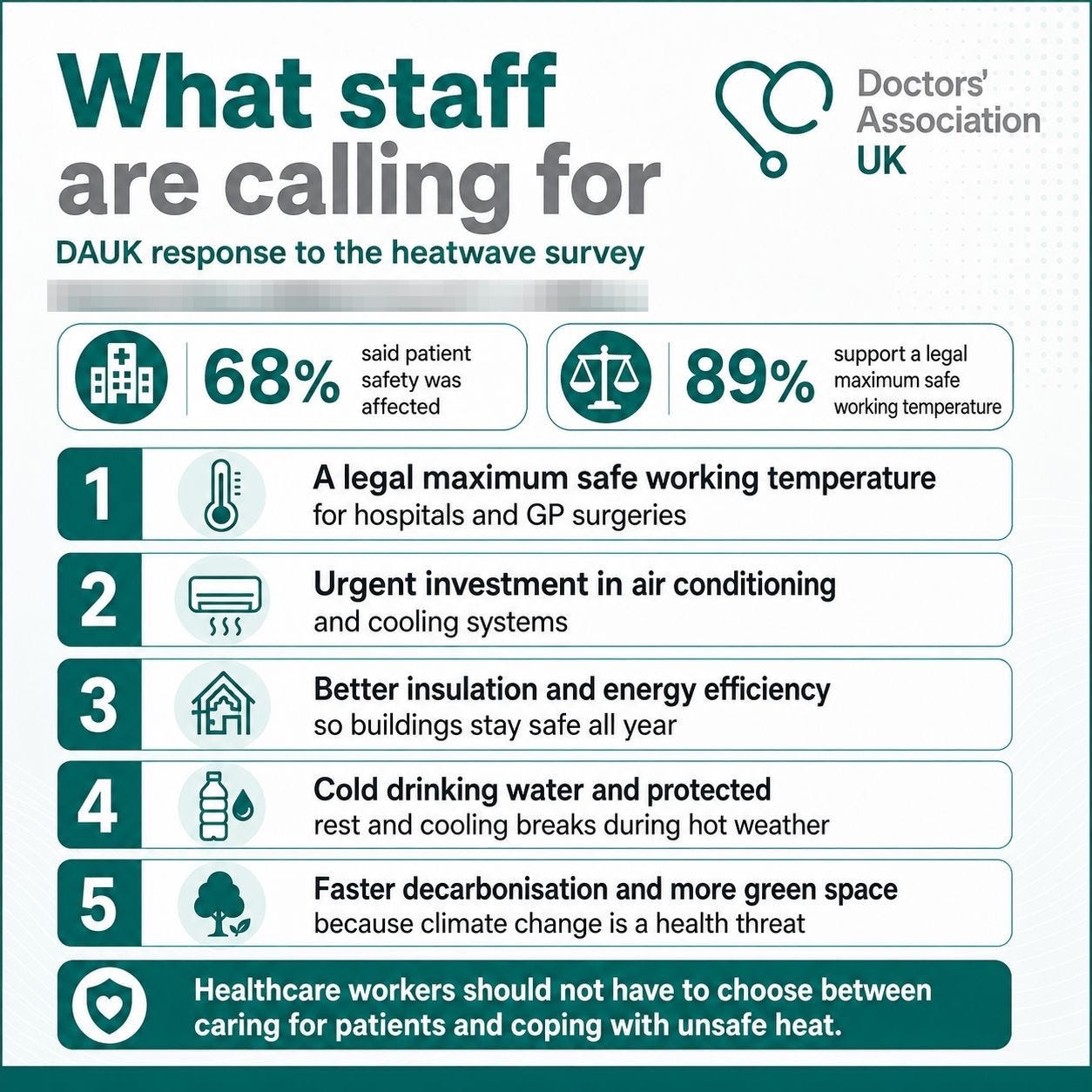
The recommendations go beyond a single temperature threshold and DAUK is calling for climate resilience to be a core part of NHS workforce planning through improved ventilation, heat-resilient building design, heatwave preparedness plans and routine monitoring of indoor clinical temperatures. This is not just an environmental initiative, but occupational health interventions that will become more important to protect staff and patients as climate change drives more frequent periods of extreme heat.
Why does it matter to MWF?
A core part of the Medical Women’s Federation’s mission is to champion safe working conditions and equitable work spaces. As the UK’s climate continues to change, protecting healthcare workers from extreme heat should be an occupational health and safety priority. Women now make up the majority of the medical workforce, and face additional challenges during heatwaves. Pregnancy increases susceptibility to heat related illness, while menopausal symptoms become significantly more difficult to manage in the overheated workplaces. Dr Amir Khan explains here why women physiologically feel hot weather more than men. Prolonged PPE use further compounds thermal stress.
Extreme heat is no longer an isolated event but a recurring consequence of climate change and the NHS needs to respond accordingly. Supporting DAUK’s calls for safer clinical temperatures is an investment in long-term sustainability of the workforce, patient safety and a more sustainable NHS for the future.
Find out how to improve NHS Sustainability:
Our Health Our Planet - Comprehensive climate resources built specifically for healthcare staff
The National Emergency Briefing - Film presenting the latest evidence on the climate and nature crisis
 | A guest post by
|